
One physical object.
A controlled digital relationship.
The right identifier is selected around the experience, security requirement, environment and data model—not around a fashionable feature.
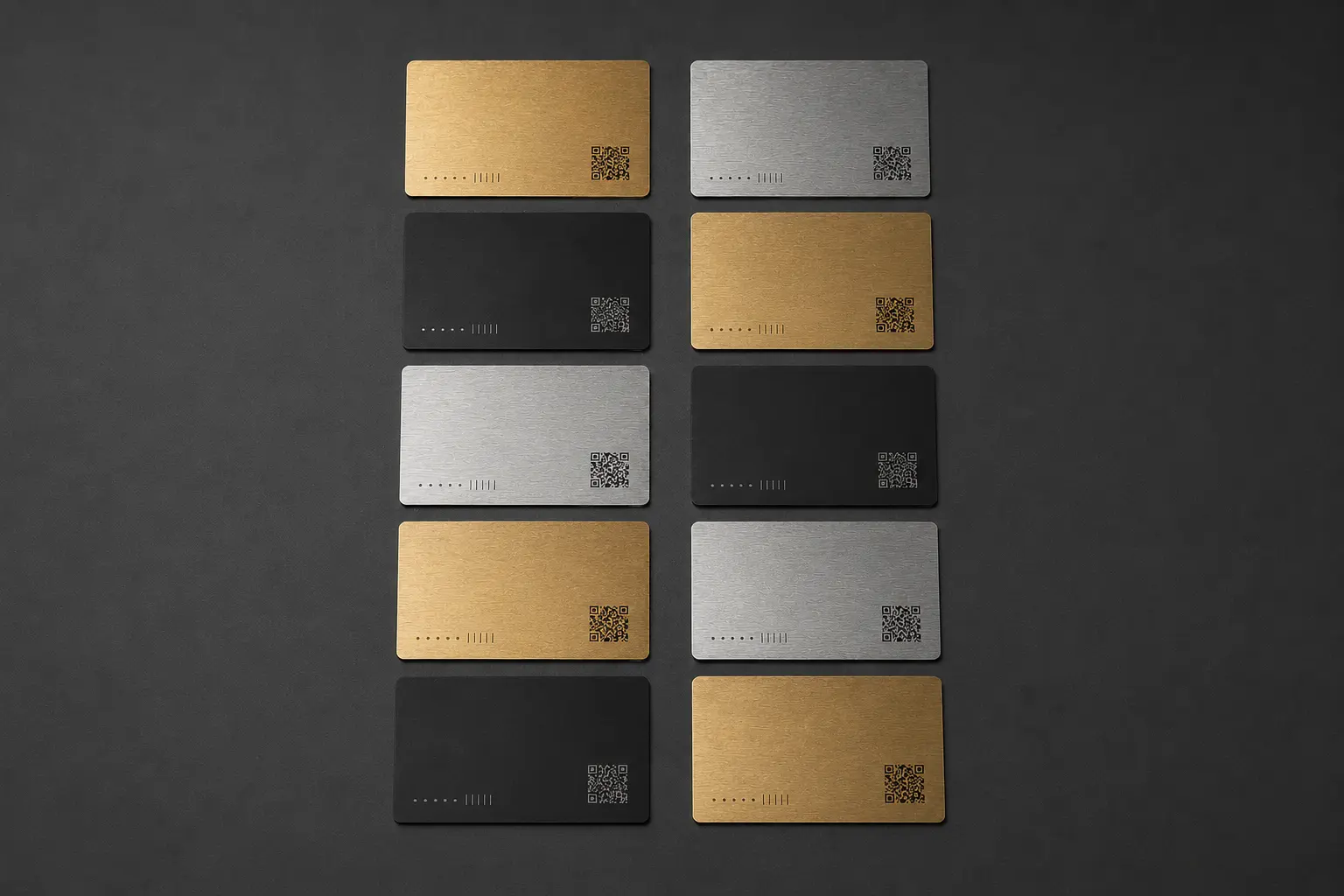
Visible, optical
and contactless layers.
A card may use one identifier or several coordinated layers. The essential requirement is correspondence: the card, product, packaging, digital record and production dataset must refer to the intended unit without uncontrolled duplication or mismatch.
Human-readable reference
Recognition, service and manual checks
Needs controlled generation and legibility
Camera-readable web access
Registration, content and service journeys
Visible, easily copied unless backed by verification logic
Compact machine-readable data
Small formats and production traceability
Reader experience must match the intended audience
Tap-based contactless interaction
Frictionless mobile access and rewritable memory
Identity alone does not prove authenticity
Cryptographic or protected interaction
Higher-assurance product verification
Chip, platform and verification architecture must be designed together
Unique values and permitted relationships are created from the approved data model.
Visible marks, optical codes and encoded identifiers are applied to the correct physical object.
Card, product, packaging and production information are checked as one coordinated dataset.
Validated records accompany the production series in the agreed structure and format.
The chip follows
the use case.
We are not tied to a single chip family. Selection is based on the complete application and current component availability.
Read-only access · controlled updates · tap-to-register · service entry · private content
UID use · password protection · originality signature · cryptographic authentication
Read distance · antenna geometry · on-metal behaviour · smartphone interoperability
Memory · write endurance · data retention · sourcing · long-term availability
Chip format · inlay architecture · placement · lamination · encapsulation
Identification is not automatically authentication.
A serial number, QR code, UID or standard NFC tag can identify an item, but stronger claims require an appropriate security architecture. We define the language of the project around what the system demonstrably does.
Technology without
the ambiguity.
Does NFC automatically make a product authentic?+
No. NFC is a communication layer. Authentication depends on the chip capabilities, credential architecture, backend verification, enrolment and operational controls.
Can QR, serial number and NFC data be different for every piece?+
Yes. Marked Matter already manages variable and cross-referenced datasets so visible, optical, contactless and production identifiers can correspond to the same unit.
Can the destination change after production?+
Often yes. A controlled redirect or platform can evolve content and services while preserving the physical identifier, subject to the selected architecture.
Which NFC chips can be used?+
The suitable device is selected from available ISO 14443-compatible and application-specific IC families according to memory, security, smartphone support, form factor, sourcing and lifecycle requirements. Final compatibility is validated per project.
Tell us what the object must unlock, protect or connect.