Aluminium & Ergal
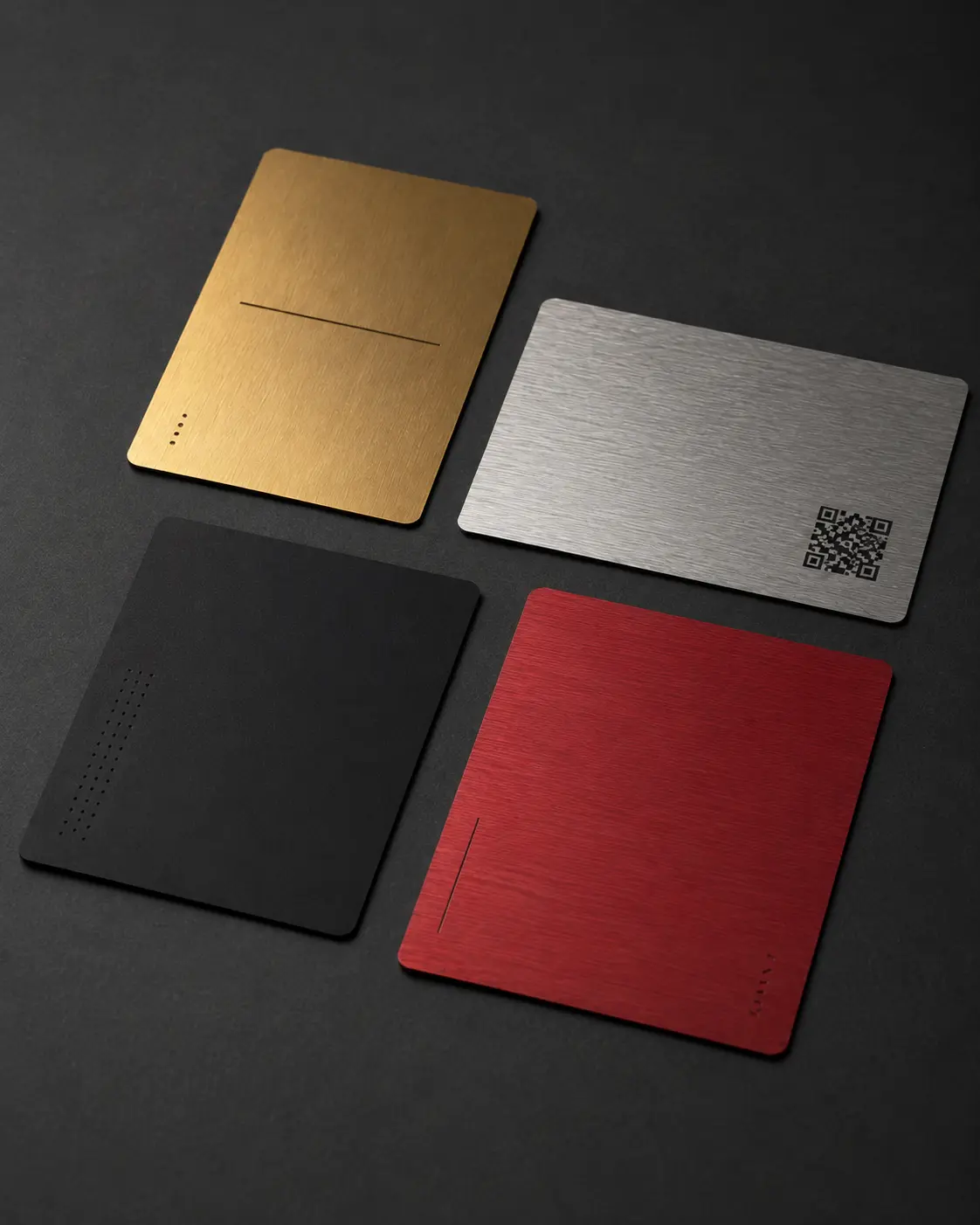
Low mass, precise machining and broad anodising possibilities. Alloy, temper and surface treatment are selected for the required geometry and finish.
 Start a project
 Every identity object is developed around how it should look, feel, age, perform and interact with the product it accompanies.
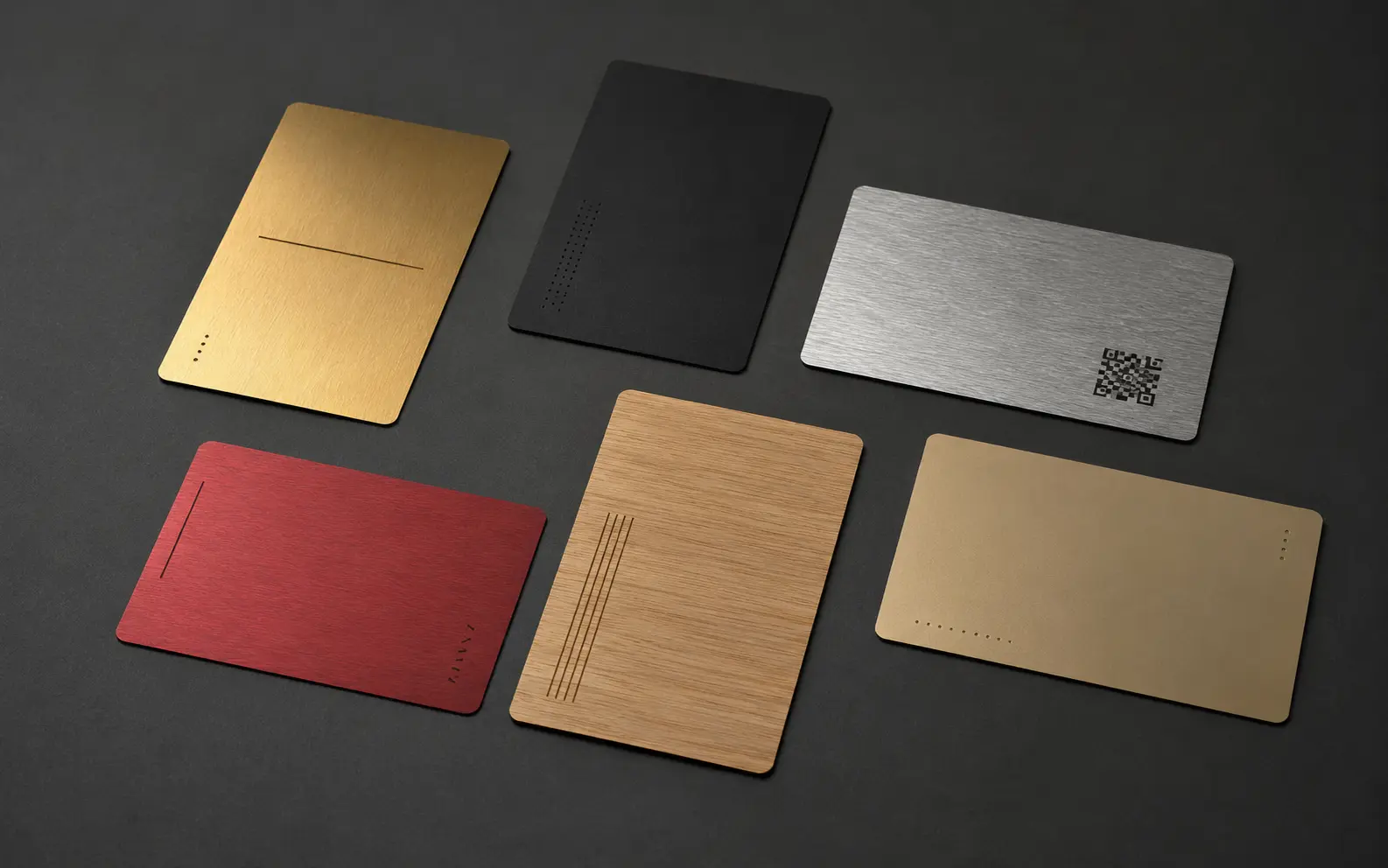
Marked Matter works across metals, composites, natural materials and premium polymers. The final specification is never inferred from appearance alone: geometry, tolerances, marking, durability, NFC behaviour, packaging and production scale are assessed together.
Low mass, precise machining and broad anodising possibilities. Alloy, temper and surface treatment are selected for the required geometry and finish.
High perceived solidity, corrosion resistance and refined brushed, polished, satin or coated surfaces.
Low weight, high strength and a distinctive technical character. Suitable grades and marking processes are qualified case by case.
Warm metallic presence with natural, protected or deliberately evolving surfaces. Oxidation behaviour is defined during development.
Available for exceptional programmes, inserts or jewellery-led details, subject to geometry, value control and production validation.
Lightweight, visually distinctive constructions. NFC integration and edge finishing require dedicated engineering.
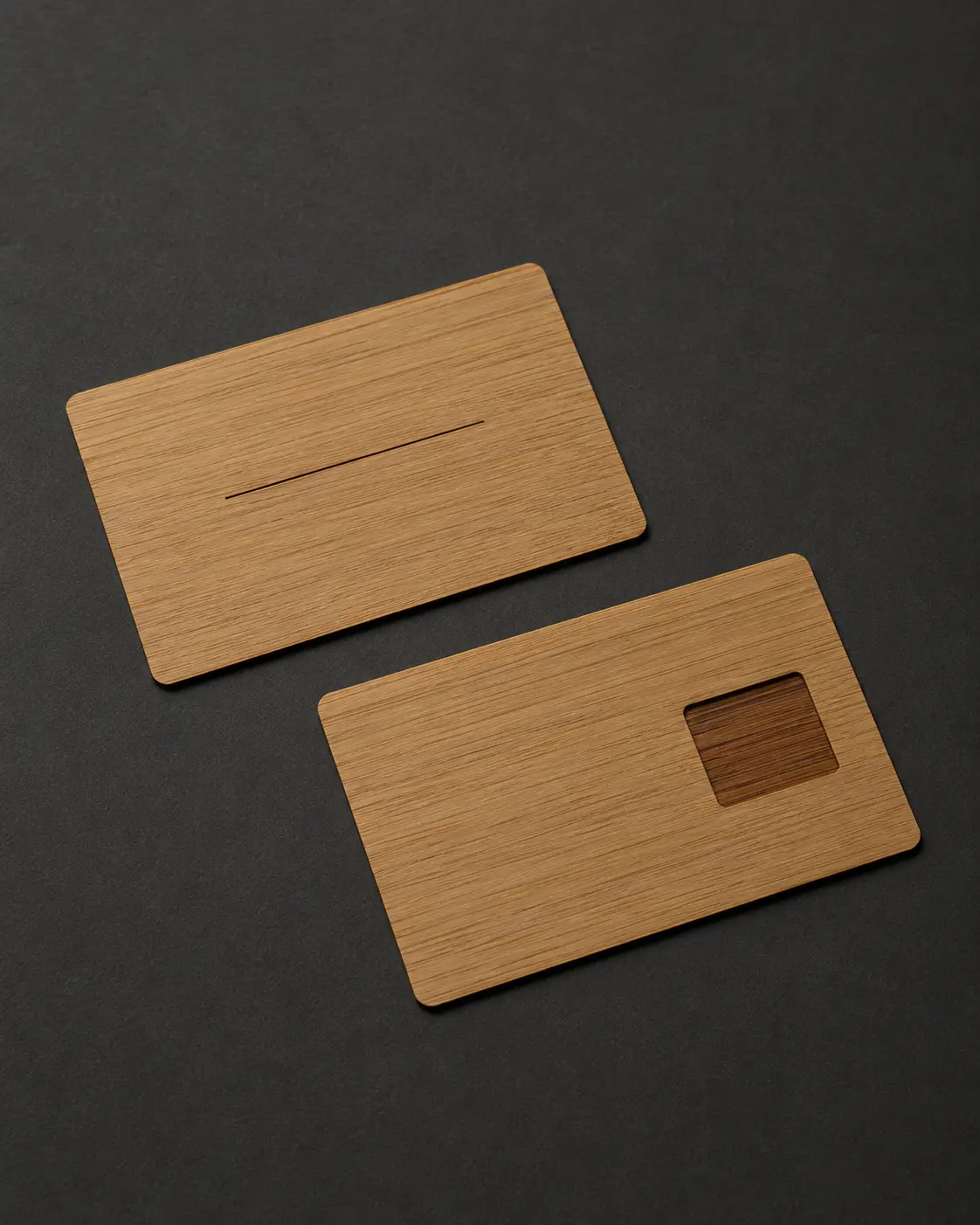
Natural variation becomes part of the identity. Species, fibre direction, sealing and dimensional stability are evaluated for the intended use.
Used as engineered veneers, inlays or hybrid layers where fragility, movement and edge protection can be controlled.
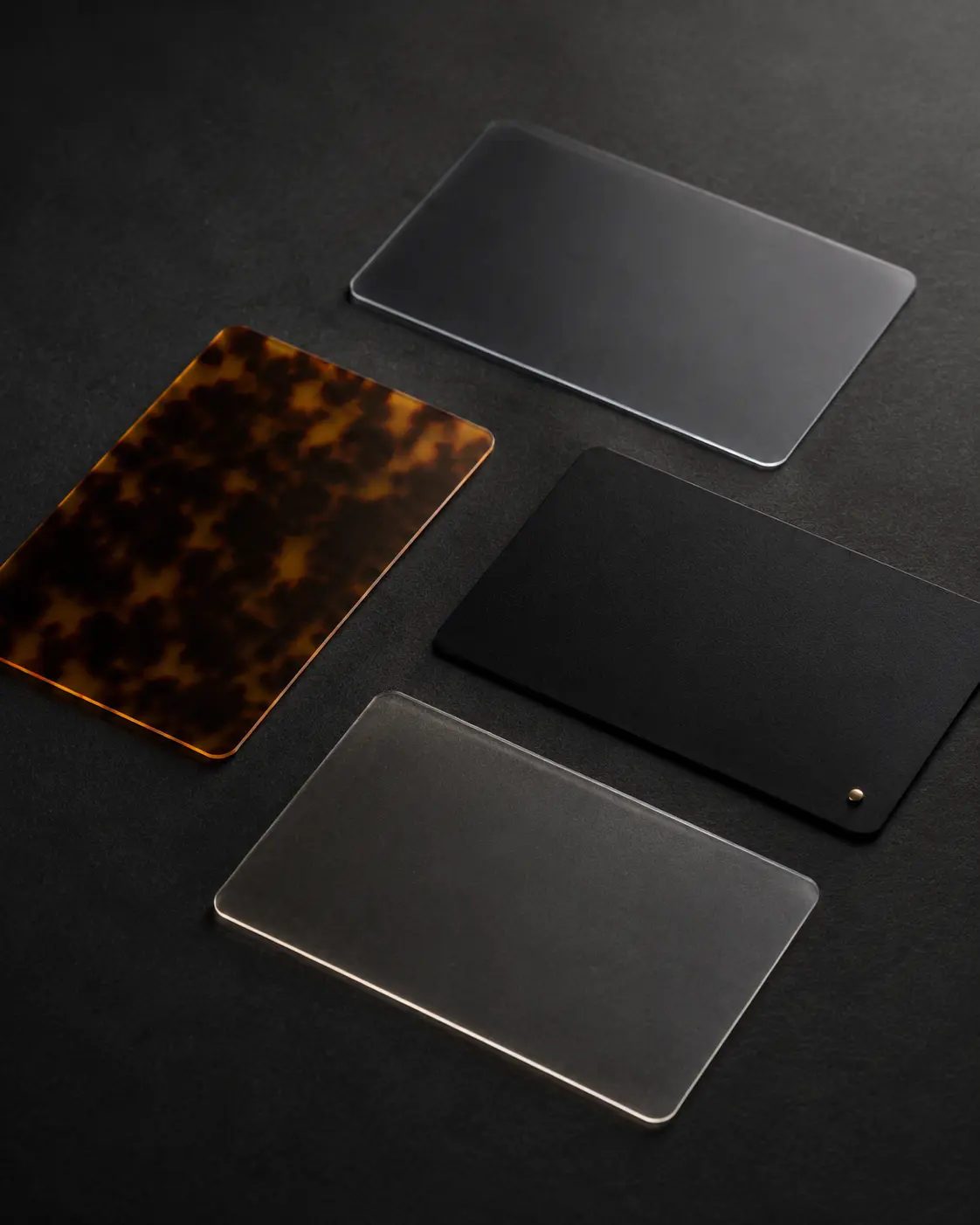
A premium polymer with depth, translucency and patterned colour familiar from eyewear. Batch variation is treated as a design parameter.
Virgin, recycled or bio-based options selected around durability, appearance, marking, contact and regulatory requirements.
Processes can be combined where their tolerances, adhesion, colour behaviour and production sequence are compatible.
Brushed · satin · polished · bead-blasted · micro-textured · patterned
Anodised · PVD · plated · lacquered · patinated · passivated · sealed
Laser engraving · mechanical engraving · chemical etching · screen, pad and digital printing
Relief · recessed fields · apertures · precision milling · edge treatments · micro-perforation
Metal foils · flush inlays · enamel-like fills · applied elements · jewellery techniques
For conductive substrates, the antenna, shielding, chip position, apertures and surrounding materials are developed as one system. Compatibility is confirmed on representative prototypes and production-equivalent finishes—not assumed from a component datasheet.
No. Conductive materials influence the antenna and cannot be treated like plastic or paper. Metal cards require a qualified antenna, shielding or hybrid construction, and read performance must be tested on the finished object.
No. Dimensions, thickness, corner radius, apertures and layer construction are established around the material, process, packaging and required interaction.
Yes. Hybrid objects can combine metals, polymers, composites, natural materials, inlays and engineered inserts when tolerances and long-term behaviour are compatible.
No. Each finish is qualified against the substrate, geometry, durability target, colour tolerance and production volume.
Bring a product, reference material, packaging constraint or visual direction.